
The public visibility of artivism often centres on individual artists, singular artworks, or moments of protest. This framing obscures a core reality documented across recent research and practice which suggests that artivism thrives through collective meaning-making. Its political force emerges through shared interpretation, amplification, and continuity rather than isolated acts of expression.
The research report launched by PAWA254 on The Role of Artivism in Advancing Socio-Economic and Political Development in Kenya confirms this pattern. Drawing on interviews and focus group discussions with artivists, civil society actors, and government representatives, the study identifies fragmentation and professional isolation as persistent constraints on the effectiveness and sustainability of creative civic action in Kenya. [Download the full report HERE]. These findings align with consultations with pan African artivists across East Africa and the diaspora, which describe similar conditions shaping practice, safety, and sustainability.

Together, these documents point to a conclusion that artivism becomes politically legible and durable when artivists function as communities of practice, rather than as disconnected individuals.
Artivism calls for collective interpretation
Artivism communicates complex political and social realities through symbols, narratives, and interventions in public space. These creative forms do not carry fixed meaning on their own. Meaning is produced through shared interpretation among creators, audiences, and communities.
The PAWA254 report demonstrates how artivists translate issues such as governance failures, corruption, gender based violence, and environmental injustice into accessible narratives that foster civic participation and accountability. This process depends on collective understanding. Signs and symbols gain political clarity through repetition, dialogue, and contextual interpretation. When artivists operate in isolation, this interpretive process weakens. Messages fragment, ethical standards vary, and political intent becomes vulnerable to misrepresentation or dilution.
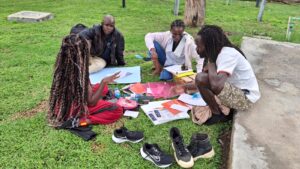
Consultations with artivists across East Africa and the diaspora describe the need for structured spaces where practitioners can reflect together, exchange knowledge, and align their work around shared principles. Community of practice models are repeatedly identified as mechanisms for collective learning, protection, accountability, and strategic growth.
Fragmentation is a structural constraint
The PAWA254 study identifies limited institutional support, inconsistent funding, and weak connective infrastructure as barriers that reinforce isolation among artivists. These conditions constrain collaboration and reduce opportunities for sustained civic influence. While individual projects may achieve visibility, longer term impact depends on whether that work connects to broader networks and movements.
Pan African consultations reinforce this diagnosis and show how artivists across East Africa experience similar challenges despite differing political and cultural contexts. Professional isolation, skill gaps, safety concerns, and income instability recur as shared conditions. These patterns indicate a systemic issue rather than a series of local shortcomings.
Community organising addresses this constraint by creating durable relationships among practitioners. It enables shared interpretation of political contexts, coordinated responses to civic challenges, and continuity beyond single moments of expression.
coordinated responses to civic challenges, and continuity beyond single moments of expression.
Support system for civic educators
At its core, a community of practice provides networking opportunities. It also functions as a support system for civic educators. Through regular engagement, peer learning, and shared norms, such communities stabilise meaning and strengthen political discourse. Consultations across East Africa and the diaspora propose a member defined structure that brings together artivists, mentors, legal experts, mental health practitioners, and organisers. This reflects the realities of artivist work, which combines creative practice with legal risk, emotional labour, and financial constraints.
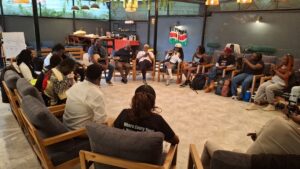
The PAWA254 report similarly recommends inclusive creative spaces and collaborative platforms that support sustained engagement, particularly for youth, women, and persons with disabilities. These recommendations show that meaningful participation, impact, and sustainability depend on collective systems rather than individual capacity alone.
When artivists organise, they strengthen their ability to interpret context, refine strategy, and respond to repression or being co-opted. Community structures also support ethical reflection and self governance, ensuring that creative civic action remains accountable to the communities and causes it represents.
Implications for investment and policy
Funding models that prioritise individual outputs over collective infrastructure risk reinforcing fragmentation. The evidence in the PAWA254 report and the consultations across East Africa and the diaspora suggests that investment in community organising yields stronger civic outcomes. Organised communities sustain knowledge, protect practitioners, and amplify impact across issues and geographies.
Supporting communities of practice aligns with broader development goals related to civic education, democratic participation, and inclusive governance. It recognises artivists as political communicators and civic educators whose work depends on shared interpretation and collective action.
Then what?
Artivism derives its civic power from causes that communities commit themselves to. The artist is the medium through which that civic work is delivered. Meaning becomes durable through shared understanding. Artivism grows through collective learning, and its impact extends through organised networks.
The transition from isolated expression to interpretive communities marks a shift from episodic visibility to sustained civic influence. Evidence from across East Africa and the diaspora shows that community organising is the mechanism through which artivism functions as a coherent and resilient civic practice. This is the time to organise across the African continent and the diaspora.
Next in the series: Article 3 examines visibility and risk, and why collective protection, including legal and psychosocial support, should be at the core of community organizing.
About the author
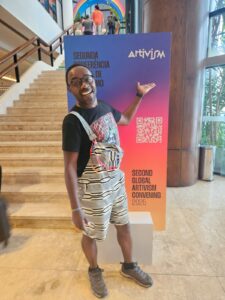
Gregory Mwendwa wa Kiio is a Pan-African educator, community organizer, and strategic communications practitioner working at the intersection of arts, culture, and communications for development.
He is the Principal Consultant at Masson & Associates and leads learning, organizing, and narrative initiatives across Africa, Asia and Latin America.
Follow and Engage Mwendwa more HERE