Reflections from regional consultations on a Pan-African Community of Practice – Masson & Associates | Jan 2026
Between November 2025 and January 2026, Masson & Associates gathered input from artivists across Kenya, Tanzania, wider Africa, and the diaspora through a short survey and structured consultations. The purpose was straightforward: identify what artivists need to keep doing the work well, and what kind of community structure would be worth people’s time.

1) The main request: shared work, not solo work
Across the consultations, one message repeated. Artivists want a reliable peer space for problem-solving and collaboration. Many are operating alone for long stretches while planning work, producing art, responding to public moments, and managing risk. People want a place to test ideas early, learn from each other’s experience, and avoid repeating mistakes in isolation.
2) The main constraints: five areas that keep coming up
Participants described five recurring issues that affect day-to-day practice:
- Peer support and coordination. People want consistent contact with others doing similar work, including a safe space to reflect and plan.
- Skills and learning. Artivists asked for practical training and exchange on strategy, digital tools, fundraising, organisational thinking, and access to mentors who can help turn learning into decisions.
- Safety. Participants raised surveillance, censorship, harassment, legal exposure, and digital risk. They asked for legal guidance, digital security support, and shared safety protocols.
- Income and funding. Many described unstable income, limited access to funders who understand creative civic work, and a lack of fair and predictable compensation pathways.
- Wellbeing and burnout. People described exhaustion and asked for support that treats wellbeing as part of sustaining the work, not an afterthought.
3) What people want the Community of Practice to look like
Participants were clear about basic design features:
- A formal structure. Many preferred registration to enable partnerships, funding, and legal standing.
- A mixed membership model. Participants want artivists, plus people who can strengthen the work: mentors, legal support, mental health practitioners, organisers, and others with relevant skills.
- A workable rhythm. Monthly sessions were the most common preference for continuity without overload.
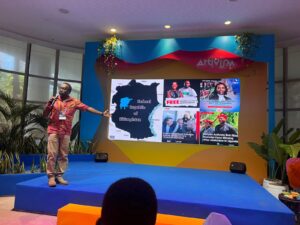
- Trust-building formats. In-person convenings were the preferred format for building trust, with virtual or hybrid options as a supplement.
- Clear expectations for contribution. People framed participation as bringing something, skills, time, hosting, facilitation, mentorship, or resources, rather than only attending meetings.
4) What it takes to build it
Based on what was shared, a useful Community of Practice will need a few fundamentals:
- Clear purpose. People need to know what the space is for: problem-solving, learning, safety support, and collaboration.
- Defined roles. Coordination cannot sit with one or two people. Roles for facilitation, membership care, learning, safety support, and partnerships need to be shared.
- A simple operating model. A regular meeting rhythm, consistent communication, and a basic decision process.
- Practical support services. At minimum: access to legal and safety guidance, learning sessions led by practitioners, and pathways for peer mentoring.
- A funding plan. Not only grants. A plan that includes membership contributions, partnerships, and fair compensation for labour that keeps the space running.
Why does this matter now?
The consultations point to a clear demand for a functioning Community of Practice that improves how artivists work, learn, and stay safe. This reflection is shared to support the next step: turning these needs into a structure people can join, contribute to, and benefit from over time.
If you’re part of this ecosystem, as an artist, organiser, funder, or collaborator, we welcome continued conversation about how we build wisely, collectively, and with care.
Book a 15-minute session with us HERE and let’s explore together, or email us at support@massonassociates.africa and let’s keep building the village that the work deserves!